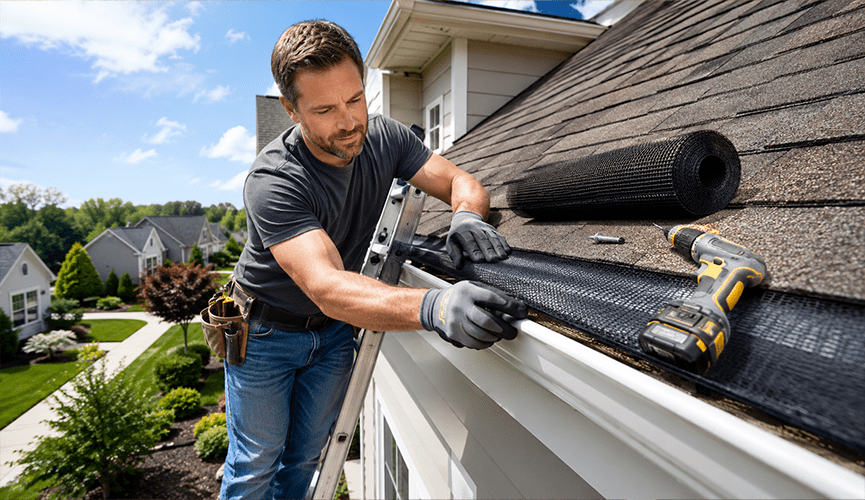
Blocked gutters can quietly damage a home long before you notice a problem. Overflowing water can stain walls, weaken foundations, damage fascia boards, and create leaks around the roof and gutters. That is why many homeowners now want to learn how to install gutter guard systems without paying for a full professional replacement.
The good news is that modern gutter guards are much easier to fit than older systems. Whether you are using wire mesh, plastic mesh, foam inserts, or heavy-duty aluminum screens, there is usually a solution for every roof type. You can install gutter protection on tile roofs, corrugated roof sheets, and older metal roofs with the right method and tools. If you are also managing broader home maintenance or upgrading your roofing and guttering adelaide systems, finding the right approach for your specific setup is key.
This guide simply explains every major installation style. You will learn how to install leaf guards on gutters, how to install rain gutter guards, and how to choose the right gutter guard kit for your home. We will also cover relief cuts, splash guards, clip systems, and screw fixing methods so you can complete a cleaner and safer guard install.
Planning Your Project: How Hard is it to Install Gutter Guards Yourself?
One of the first questions homeowners ask is, “how hard is it to install gutter guards?” The answer depends on your roof height, gutter condition, and the type of gutter guard you buy.
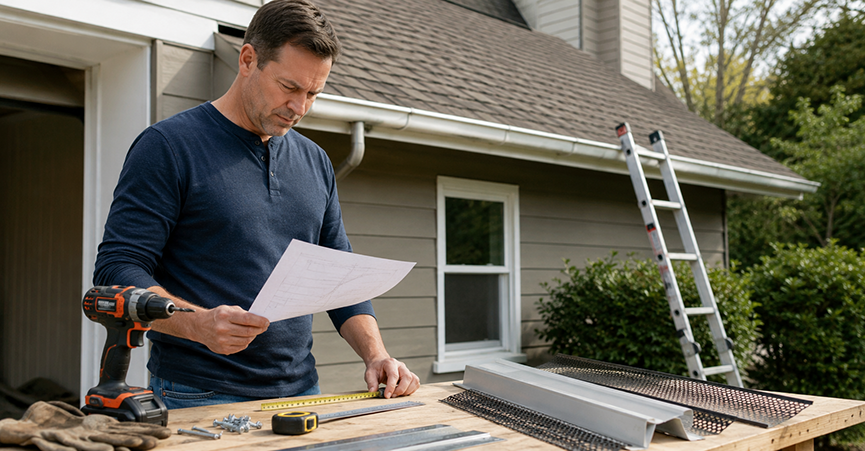
Most modern DIY gutter guard kits are designed to be easy to install. If your gutters are already in good condition, the work is mostly about measuring, trimming, and securing the material correctly. A single-storey home with straight gutters can often be finished in one afternoon.
Before starting, clean the gutters fully. Remove leaves, mud, and old debris so the mesh sits flat. Check for rust, loose brackets, or sagging sections. Installing gutter guards over damaged gutters usually creates more problems later.
Ladder safety matters just as much as the installation itself. Always place the ladder on level ground and avoid leaning too far across the roof edge. If your roof and gutters are difficult to access, hiring a professional gutter installation Adelaide team may be safer.
Here is a simple guide for estimated installation times:
- Small terrace home: around 3 hours
- Standard three-bedroom house: around 5 to 6 hours
- Large four-bedroom property: usually a full day
- Multi-storey homes: often 1 to 2 days
If you are wondering how long does it take to install gutter guards, weather conditions also matter. Wind and rain can slow the process and make roof work dangerous.
Choosing Your Protection: Leaf Gutter Guard vs. Rain Gutter Guard Systems
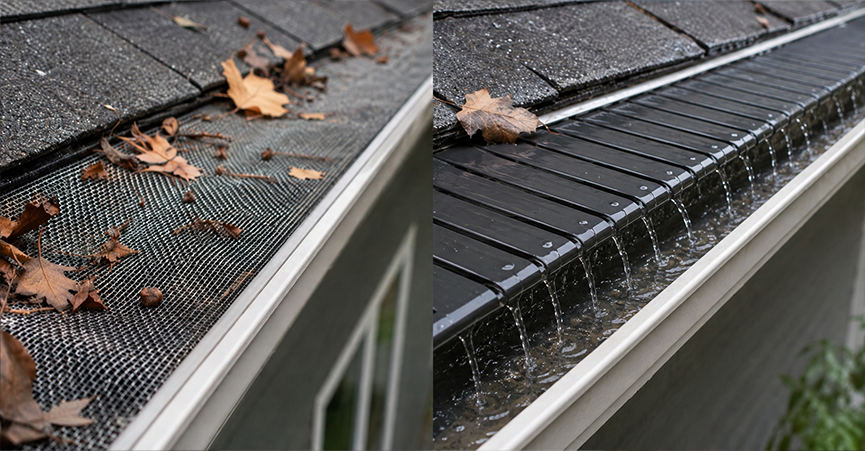
Not every type of gutter guard works the same way. Some are built mainly to stop leaves, while others are designed to handle fine debris and heavy rain at the same time.
Learning how to install leaf gutter guards is usually simpler because the openings are larger. These systems stop leaves, twigs, and larger debris from entering the gutter. They are common around homes with nearby trees.
Rain gutter guards use finer gutter mesh to stop smaller particles like dirt, seeds, and roof grit. They also improve water flow during storms. Many Australian homes prefer fine mesh systems because they work well during heavy rainfall. According to the Bureau of Meteorology climate extreme data, intense storm events require systems that won’t overflow quickly.
If you want to know how to install gutter leaf guards in high foliage areas, choose a stronger metal mesh rather than lightweight plastic mesh. Fine stainless steel or aluminum systems usually last longer under harsh weather.
Common gutter guard materials include:
- Wire mesh for strength and fire resistance
- Plastic mesh for budget-friendly projects
- Foam inserts for fast installation
- Aluminum screens for long-term gutter protection
Homes with metal gutters often benefit from tighter-fitting mesh systems. If you are researching how to install leaf guard in metal gutters, make sure the mesh sits securely against the gutter lip without creating gaps where leaves can enter. For older or damaged systems, professional gutter installation and repair Adelaide services can also help ensure the gutters are strong enough before installing new gutter guards.
The Hardware Guide: How to Install Gutter Guards in Existing Gutters with Screws
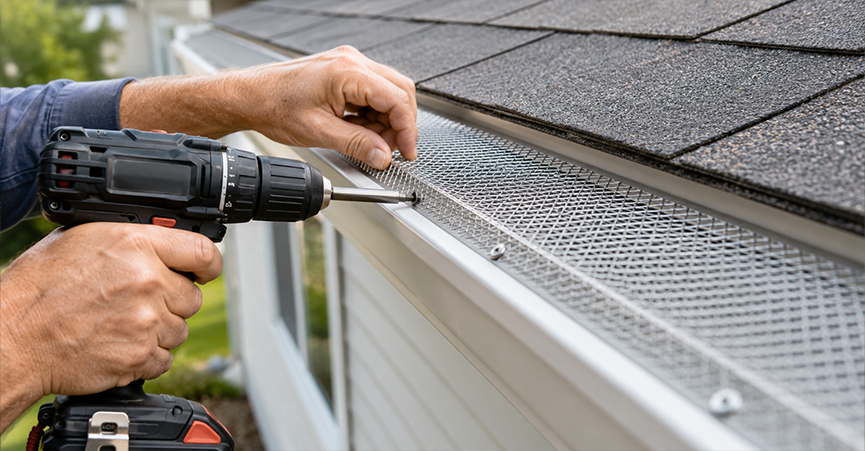
One of the strongest installation methods involves fastening the gutter guard directly into existing gutters with screws. This method works especially well in windy areas where loose mesh can lift over time.
To understand how to install gutter guards in existing gutters with screws, begin by measuring each gutter section carefully. Cut the mesh slightly longer than needed so you can overlap joins by a few centimetres.
Most installers use self-tapping screws with hex head drivers. These screws secure the mesh tightly without damaging the gutter shape. Place screws every 20 to 30 centimetres for better support.
Basic tools usually include:
- Cordless drill
- Tin snips
- Hex head driver
- Measuring tape
- Gloves and eye protection
Start at one end of the gutter and secure the mesh along the outer gutter lip first. Then attach the rear section beneath the roof edge or fixing strip. Avoid over-tightening the screws because this can bend lighter mesh panels.
Some homeowners prefer learning how to install clip-on gutter guards instead. Clip systems are faster because they snap into place without drilling. They are useful for temporary gutter protection or smaller DIY projects. However, screw-fixed systems usually perform better during storms and strong winds.
If you are trying to learn how to install a gutter guard correctly, always test water flow afterward with a garden hose. This helps identify low spots, loose edges, or overflow points before the next rainstorm. If you notice sagging sections, rust, or damaged channels during testing, it may also be the right time to consider professional gutter repair and replacement Adelaide services before completing the installation.
Masterclass: How to Install Gutter Guard on Corrugated and Metal Roofs
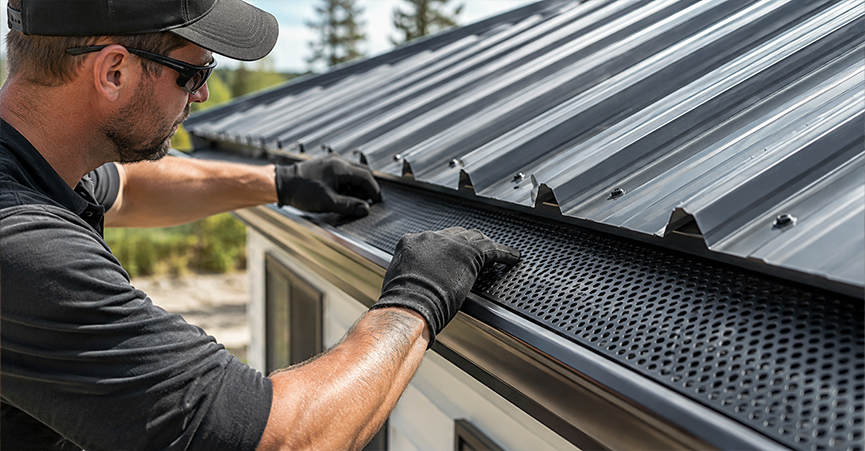
Installing gutter guards on corrugated roofing requires a different approach because the roof surface contains raised ridges and channels. Flat mesh cannot simply sit across the surface without adjustment.
If you want to know how to install gutter guards on metal roof systems, the most common method is called the saddle and trim technique. Metal saddles are shaped brackets that match the corrugated roof profile. These brackets help hold the gutter mesh firmly against the roofing sheets.
When learning how to install gutter guard on corrugated roof structures, start by cutting the mesh to fit the roof shape carefully. Use tin snips to trim around the corrugated peaks so the mesh sits flush.
Then:
- Position the mesh over the gutter opening
- Attach saddles along the corrugated ridges
- Secure the front edge to the gutter
- Check that water can still flow freely
This process is common when installing aluminum gutter guards or metal gutter guards because rigid materials need stronger support than flexible mesh.
Color-matched saddles can also improve appearance. Many homeowners prefer guards that blend into metal roofs instead of standing out visually.
If your corrugated roof is older, inspect all screws and roofing sheets before starting. Loose roofing can shift while you work and affect the final gutter guard fit.
Advanced Fitting: How to Install Gutter Guard on Tiled Roof Structures
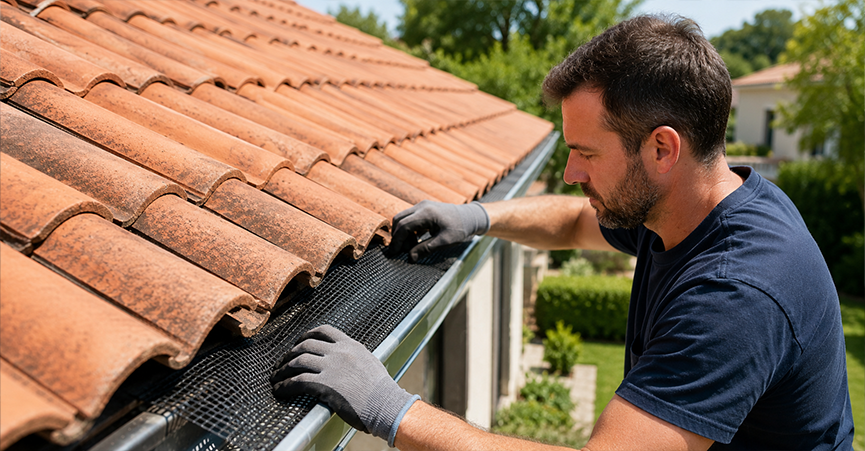
Tile roofs are one of the trickiest surfaces for gutter guard installation because curved tiles create uneven gaps. This is where relief cuts become important.
If you want to understand how to install gutter guard on tiled roof systems properly, the mesh must follow the contour of the tiles without lifting. Relief cuts are small cuts made in the gutter guard mesh so it can bend neatly around curved sections.
Begin by sliding the rear edge of the mesh under the second row of tiles. This is often called the tuck method. The goal is to tuck the mesh securely while keeping the water flow smooth across the roof.
To complete the installation:
- Measure the tile spacing carefully
- Mark areas needing relief cuts
- Use snips to create small, angled cuts
- Tuck the mesh beneath the tile course
- Fasten the front edge to the gutter
Many homeowners researching how to install mesh gutter guards struggle with tile movement. Never force tiles upward aggressively because cracked tiles can create leaks later.
Fine gutter guard mesh works particularly well on tile roofs because it blocks small debris from washing beneath the tiles. If you are learning how to install gutter guard mesh for bushfire-prone areas, choose fire-rated aluminum or steel products instead of plastic materials to satisfy the strict AS 3959 building standards for bushfire-prone areas.
A properly fitted gutter guard on a tiled roof should look neat and almost invisible from the ground. If the mesh appears uneven, loose, or poorly aligned, it may be a sign of damaged gutters or incorrect installation. In that case, it is best to contact professional Adelaide gutter replacement services to inspect the system and ensure the roof and gutters are properly protected.
Material Specific Steps: How to Install Foam and Plastic Mesh Gutter Guards
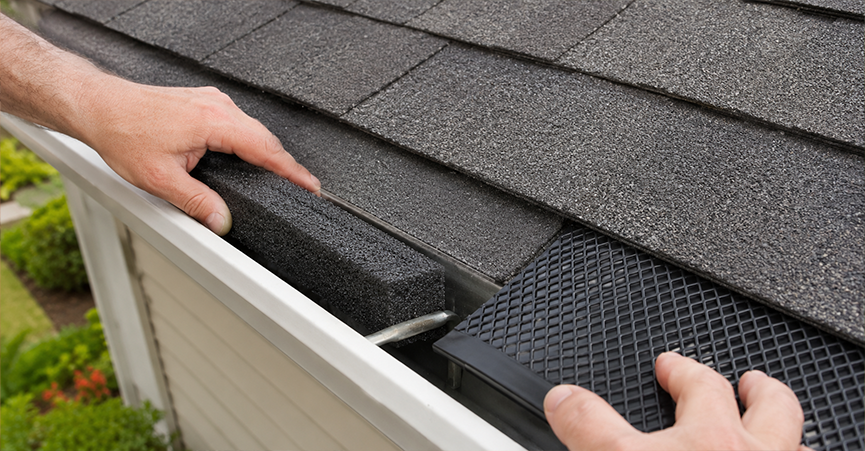
Budget-friendly systems remain popular because they are simple to install and require fewer tools. Foam and plastic mesh products are common choices for smaller homes and quick upgrades.
If you want to know how to install foam gutter guards, the process is surprisingly simple. Foam inserts are cut to length and pushed directly into the gutter channel. The foam allows water through while blocking leaves and debris on top. Foam systems are fast, but they may trap dirt over time. In hot weather, lower-quality foam can also break down under heavy UV exposure.
Alternatively, learning how to install plastic gutter guard products usually involves clipping or screwing a flexible polymer mesh along the gutter edge.
To install a plastic mesh gutter guard system:
- Clean the gutters thoroughly and let them dry.
- Roll out the mesh evenly along the length of the gutter.
- Cut sections to fit corners and joins using utility shears.
- Secure the outer edge with clips or specialized trim screws.
- Test the water flow with a hose to ensure no sagging occurs.
While plastic mesh is affordable and easy to trim, metal systems normally last longer, as strong sun exposure can weaken cheap plastic over several years. Independent testing on coatings and material durability by the CSIRO demonstrates how prolonged UV radiation and heat can break down lower-quality polymers.
Pro Level Details: How to Install Gutter Splash Guards and Mitres
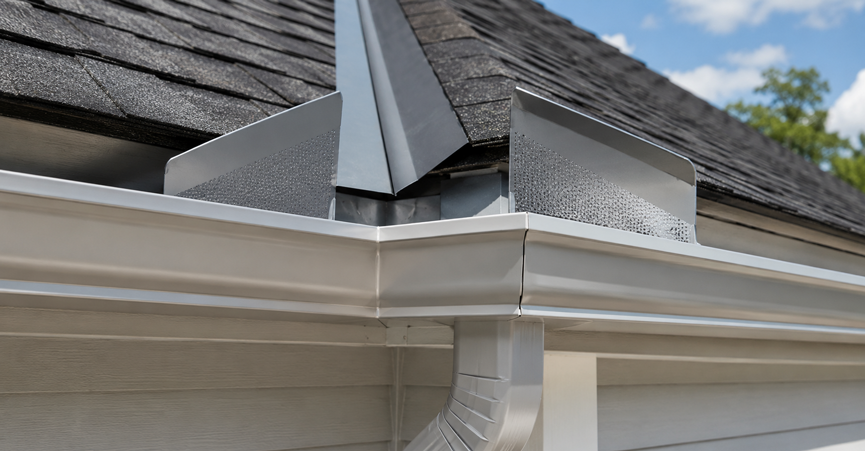
Some parts of your roof drainage system experience much heavier water flow than others. Valleys, corners, and mitres are notorious for overflowing first during intense storms. This is why experienced installers add identifying features like splash guards in high-velocity zones where rainwater regularly overshoots the channel.
Splash guards act as a vertical barrier attached near roof valleys or sharp gutter corners, directing fast-moving water back down into the mesh.
Installation steps include:
- 1. Clean the gutters thoroughly around the target corner.
- 2. Position the splash guard contour-flush against the valley or mitre corner.
- 3. Secure it firmly using self-tapping screws or blind rivets.
- 4. Apply a bead of silicone sealant to any underlying gaps if needed.
- 5. Test the channel during a high-volume hose flow simulation.
This extra protection helps reduce overflow, erosion, and water stains around the home. Professional gutter installers often recommend splash guards for homes with steep roofs or large roof catchment areas.
The Auspro Advantage: Australian Made Reliability
A gutter guard should do more than simply block leaves. It should survive storms, harsh sunlight, heavy rain, and years of outdoor exposure.
At Auspro Gutter Guard, every system is designed for Australian conditions. Whether you need a heavy-duty gutter mesh solution for metal roofs or a tile tuck system for older homes, the goal is reliable long-term gutter protection instead of temporary fixes.
Auspro products include:
- Fire-rated aluminum mesh
- DIY gutter guard kits
- Premium steel systems
- Custom solutions for tile roofs and corrugated roof designs
- Professional-grade accessories and splash guards
Cheap materials often sag, crack, or fail after only a few seasons. Investing in quality mesh and fittings can reduce maintenance and protect your roof and gutters for years.
FAQs
Can I install gutter guards by myself?
Yes. Many gutter guards are designed for DIY installation, especially on single-storey homes with safe roof access.
How are gutter guards attached to the gutter?
They are usually attached with screws, clips, saddles, or support brackets, depending on the roof type and mesh material.
Do gutter guards need to be screwed in?
Not always. Clip-on systems exist, but screw-fixed systems are generally stronger and more secure.
Can you install gutter guards on existing gutters?
Yes. Most gutter guards are specifically designed to fit existing gutter systems.
Which way should gutter guards face?
The mesh should slope slightly toward the gutter so rainwater flows inside instead of overshooting.
Should gutter guards be installed under shingles?
In some roof designs, yes. However, always check the roof warranty guidelines before installation.
What is better, plastic or metal gutter guards?
Metal gutter guards usually last longer and handle harsh weather better than plastic mesh systems.
Are metal gutter guards good?
Yes. Aluminum and steel guards provide strong gutter protection and better durability.
How long do leaf guards usually last?
Quality metal systems can last over ten years with proper maintenance.
Can gutter guards void a roof warranty?
Improper installation can affect warranties, so always follow manufacturer guidelines carefully.
How to install gutter guards on a standing seam metal roof?
Special clamps or brackets are normally attached to the standing seams without drilling into the roof panels.
How to protect a metal roof while working on it?
Wear soft-soled shoes, avoid dragging tools, and spread weight carefully across supported roof areas.